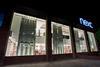














Today, Next unveiled a dire set of results, leading boss Lord Wolfson to call it the most challenging year in a quarter of a century.
Pre-tax profit fell 8.1% in the year to January 2018. Profits from its stores crashed a whopping 24%, although online profits rose 7.4%.
Wolfson said that while the year was “uncomfortable”, “it has also prompted us to take a fresh look at almost everything we do: from the structure of our store portfolio, the in-store experience and the generation of alternative retail revenue streams, the management of our cost base, our sourcing and buying methods, stock management and, most importantly, our online systems, marketing and fulfilment platform”.
It’s the first time in recent years that Wolfson has changed strategy so drastically – when 2016’s dismal full-year results rolled in, he focused on improving core product ranges and giving customers better fulfilment options.
The fact that he discussed such wide-ranging changes points to the seismic shifts affecting the industry right now, especially the ongoing shift to online.
Concessions
The most dramatic change was the news that Next is experimenting with concessions.
Its Arndale store is currently host to a florist, Prosecco bar, restaurant, children’s activity centre, café, card and stationery shop, and a barber.
These will soon be joined by a car showroom and Next is also in negotiations with a spa operator and bridalwear concession.
It sounds like the retailer is trying to become a department store chain – not a market anyone would enter willingly right now – but Wolfson was adamant that that isn’t the case.
“The fact that Lord Wolfson discussed such wide-ranging changes points to the seismic shifts affecting the industry right now, especially the ongoing shift to online”
“We’re not trying to become anything that has existed in the past,” he said. “We are just trying to make money.”
And make money it should – the retailer estimates that it will earn around £800,000 every year from subletting the Arndale store, which will account for 40% of its rent and 22% of its total occupancy costs (rent, rates and service charge).
“The big difference between a traditional department store and what we’re doing is that a lot of stock in concessions is sold on commission or wholesale. We do not want to do that. These are pure rental concessions.
“When I look at the economics of selling third-party brands in retail shops, it doesn’t look very exciting. They look a bit like a department store but… they are still a Next, they just have a hairdresser too.”
Whether every Next in the country will soon have a hairdresser, spa, car showroom or barber is as yet unknown. Next will monitor Arndale carefully and then approach each store’s usage on an individual basis.
Store estate
Next has historically relied on store expansion to increase retail sales. This year, that approach failed badly, with store sales crashing 7.9% and profit falling 24%. Coupled with the permanent ongoing shift to online spending, it is fair to say that this strategy’s time is up.
Today, Wolfson termed its estate – comprised of 528 stores – “an asset, albeit one that is declining in value, and not a liability”.
While the retailer will continue to open stores where it sees money to be made, it also addressed in detail how many leases it has coming to an end over the next three years – 240. That number mirrors a big push for expansion in previous years.
Lord Wolfson spoke today about managing the decline of its retail business. Looking at Next’s projections, it is clear that stores are still highly cash-generative. Its most comprehensive scenario sees stores generate £431m in profit from now until 2031, as they slowly become unprofitable.
Technology
Next is stepping up its game on technology, playing catch up with other retailers who seem to have pulled ahead of it in recent years.
“I wish we had done it three years ago,” Wolfson admitted today, when asked why he was choosing to invest heavily in technology.
Projects include a new data management platform, a new content management system, a customer segmentation system and an optimisation and testing platform.
He added that the business had “learned a lot of lessons” from online competition and knew that it needed to innovate much more quickly in the digital space.
“We’ve just significantly increased our level of investment in both systems and marketing – especially for big pieces of third-party software – and we have no intention of relaxing the rate at which we invest,” Wolfson said.
“We’ve learned a lot of lessons from other people in our industry and we haven’t spent too long deciding which software to use; we’ve gone for the one we know works well for one of our more advanced online competitors.
“This is one of the reasons we’ve been able to do this so quickly: we said, if it works for them, it works for us.”
Next is facing into a storm right now but Wolfson’s shift in thinking puts it in a better shape to ride it out. Whether even he can solve the equation as conditions worsen is another matter.


4 Readers' comments