













I’ve always been interested in the notion of craft in design because I believe in the principles of meaning and understanding that craft implies.

I’ve always been interested in the notion of craft in design, not because it harks back to an era of traditional and hand made, but because I believe in the principles of meaning and understanding that craft implies, whether it’s in the most beautiful and simplistic of forms, or something that is admired for its complexity.

Craft is both a discipline and a mindset that inevitably creates uniqueness, and therein lies the attraction for a brand.

It’s the emotional connection between brand and consumer that creates a bond. This ultimately justifies the premium we pay for this relationship. Likewise, for many brands, it’s the craft connection that comes through in the creation of their products that generate provenance and originality.

Much of our retail work has by our own definition been crafted, for us this means it’s in the detail, and in the detail of the brands we work for. It’s about blending, balancing, and storytelling. It’s not defined by materials, craft is in the curation of things that create uniqueness.

Therefore environments that are designed to be raw, earthy or more traditional work with digital media for the same reasons that clean, minimal and digital environments work with crafted materials and furniture. Partly it’s because there are no real boundaries any more in where we shop and pretty much how we choose to learn, experience or interact with a brand. We continually search for connections of one kind or another, and we look for reassurance in the familiar and excitement in the discovery of the new and the unknown.

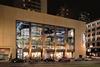
In our work over the years for Levi’s this juxtaposition of heritage and modernity was a constant theme. It’s interesting to think about how our San Francisco flagship design in 2000 was possibly the most technically advanced store in the world at that time, with body scanners to create an individually tailored fit, consumer fingerprint recognition to access music and imagery, and a cinema quality projection screen that filled the entire shopfront over three floors, which was visible to everyone on Union Square. Yet the store design and the brand story remained one of celebrating heritage in a contemporary context.

Many brands use this juxtaposition to great advantage, contrasting shiny technology with a reassuring aesthetic, it’s a balance and a reminder to consumers that those brands are connected and forward thinking, but value highly their lineage. Burberry on London’s Regent Street is a good example where a brand with lineage sits in classical architectural surrounding, expressing itself through digital media on a grand scale, which makes for a beautiful and relevant combination that works so well.

But it’s not just the idea of the contrast of the crafted environment that is only using digital media to express the immediacy of the now. It’s interesting to see fashion brands in contemporary environments using digital media to show the traditional craft of their product, Hermès being an example. It’s also interesting to note that as we see more and more brands refer to their videos as films, is digital media being layered with elements of the film-maker’s craft, as the ability to produce artful moving imagery ups the emotional connotations?

Interestingly when we designed stores in the analogue age, when video walls were cutting edge, the craft was in hiding the bulky hardware. Now the digital connection is in everyone’s hand, on the tube, in a bar, on the street and in the store and the ways in which we connect are endless. Ironically you might argue digital media and connectivity is most conspicuous when it’s missing, it’s become an expectation - an essential part of life. Therefore, critically, the ways in which we use it in store have to say or give something that genuinely enriches the consumer experience or else it’s pointless.

  • Jeff Kindleysides, owner of design consultancy Checkland Kindleysides