











The Aldi boss broke the company mould to bang the grocer’s drum during the recession. As he steps down, Jennifer Creevy asks if he was a victim of his own success

Paul Foley

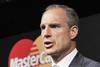
Paul Foley shocked the grocery world last week when he made a surprise exit from Aldi.

As managing director of the retailer’s UK and Ireland division, Foley lived and breathed the discount grocer for the past 20 years.

For the majority of Foley’s Aldi career he stuck to the mould set by the hard discounter’s German parent Aldi Süd - kept his head down, avoided the press and got on with the job. Despite being a Londoner, Foley carried an almost stereotypically Germanic persona, delivering facts in a slightly robotic monotone.

That work ethic was set out by Aldi’s secretive billionaire founders - Theo and Karl Albrecht - who have not been seen in public since Theo was kidnapped in 1971. He was released 17 days later after paying DM7m in ransom but the trauma made the pair even more reclusive.

But Foley went on to break the mould over the past two years. When the credit crunch bit he realised there was a great opportunity to drive sales and gain market share. So he came out of his shell and started to proselytise for Aldi. Many commentators appreciated Foley’s new found voice. Retail Knowledge Bank senior partner Robert Clark says his approach was “a breath of fresh air”.

Foley was also quick to contact journalists or commentators who wrote about Aldi to make sure they understood the grocer’s model. Clark says: “He was very approachable and open.”

Foley created the so-called Aldi effect, whereby shoppers were said to be flocking to discount grocers as the recession deepened. Sales were flying and Foley banged the Aldi drum loudly about its quality products and cheap prices.

Foley has always been well respected. Prior to joining Aldi, he was a management trainee at frozen food chain Bejam, later swallowed up by Iceland.

Iceland chief executive Malcolm Walker remembers: “We inherited him after the takeover and about six months after the buy he handed in his notice. I tried to persuade him to stay, but he wanted to join Aldi.”

Walker says Foley is “very capable and focused” and played a key role in building Aldi in the UK. When he went on a PR offensive he promised to open a store a week until 1,500 was reached and backed up his talk with sales, but Foley’s sudden departure has raised questions about whether his new found fame went down well with his German masters.

Aldi’s growth and Foley’s leadership even led to Tescolaunching its Discounter range in response.

But the past three months have shown a different pattern. According to TNS Worldpanel, Aldi’s sales rose 8% in the 12 weeks to July 13 against rises of 20% to 25% during last year.

Many have speculated that Aldi HQ questioned Foley’s strategy when growth slowed. One source said: “Aldi was so secretive, then all of a sudden Foley changed that and took a u-turn in strategy. It started introducing more upmarket products and advertising a lot more. Aldi were always very good at sticking to the knitting and it may have been that head office didn’t like it any more.”

TNS Worldpanel research director Ed Garner says: “Aldi was on a roll with recession hysteria and the loss of Kwik Save played into their hands. A lot of shoppers did try Aldi but many found it a dour shopping experience and didn’t go back.” He points out that Aldi is still showing growth but it has waned - Asda, for example, is gaining customers from Aldi.

Aldi said Foley’s decision to leave was mutual and has installed Armin Burger - who was head of Aldi’s Austrian operation - to replace him. Burger will return Aldi to its roots, but Foley is sure to re-emerge elsewhere in retail.

What Paul Foley said

  • “What the credit crunch has done is jolted some people into giving us a try.”
  • “Our products are better than other supermarket own-labels, as good as the leading brand in the sector and significantly cheaper.”
  • “If customers want choice, they have to pay for it.”
  • “Suppliers that are bullied into believing that low-cost-base businesses can be stopped are going to ruin their own businesses.”
  • “There is more good news about us now than the old scepticism.”