













From Brexit to Covid-19, Russia’s invasion of Ukraine to supply chain issues and soaring inflation, the power of external influences to challenge the retail industry has been relentless in recent months.
With such accelerated disruption, retailers have needed to reinvent themselves to be resilient and agile, learning to balance short-term challenges with long-term evolution.

With this rapid pace of change in mind, Retail Week has published a mid-year update to our Retail Horizon 2022 report, highlighting the key areas for focus during the coming six to 12 months to ensure that your strategy is geared up for success.
Retail Horizon looks at influences across society, technology, economy, policy, industry and culture to identify the major trends shaping retail. It includes implications and case studies to illustrate these and to help retailers plan for the future.
Cost of living crisis bites
By far the biggest concern for business, government and consumers is the challenging economy. In May, eight out of 10 UK households noted an increased cost of living, according to the Office for National Statistics. Consumer confidence has been on a clear downward trajectory since last August. The Office for Budget Responsibility is anticipating a 2.2% decline in real household disposable income this year, with an ongoing impact anticipated until 2025.

At the same time, retailers are reporting rising costs within their businesses, including transportation, fuel, raw materials such as wheat and sunflower oil, supply chain costs and upward pressure on wages. Retailers’ overheads will continue to rise as inflation soars into double-digits, with the peak expected to coincide with this year’s crucial golden quarter.
But the ability to pass on these costs is limited, with businesses remaining under pressure to absorb as much as possible to protect customers’ wallets.
Among many initiatives, Tesco is leveraging its Clubcard Prices and Aldi Price Match initiatives to minimise the impact on shoppers, while big-four rival Asda has launched its Just Essentials budget range and locked the prices of 100 essential items until the end of 2022.
After reporting its first quarterly loss for seven years in April, Amazon revealed that its shipping container costs have more than doubled compared to pre-pandemic rates and it has been forced to share that burden with third-party merchants. Meanwhile, Next has forecast several rising costs that will impact its business this year including wage inflation, energy, technology, warehousing and distribution.
The economic outlook paints a bleak picture for retail, with consumers expected to trade down and rein in discretionary spending. Even affluent customers will make more considered purchases, meaning retailers must give them incentives, innovative experiences and highly desirable products to convince them to part with their money.
Loyalty schemes and ecosystems will be valuable tools for retailers in the coming months as wage rises fail to keep pace with inflation. There is certainly no room for bad or mediocre retail.
Consumer habits evolve
As we come out of the pandemic, it is clear that consumer priorities have shifted and continue to evolve. Hybrid working is here to stay but footfall and ecommerce trends reveal that shoppers have been keen to return to physical stores – though in April, 28% of UK adults told a YouGov poll they saw “no need to return to in-store shopping” this year.
What is apparent is that digital-first consumers are seeking tech-driven interactions, demanding more from businesses including hyperpersonalised experiences, loyalty incentives and the flexibility to shop however they want.
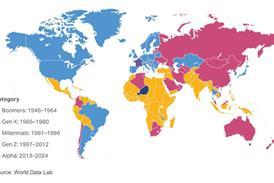
The influence of Gen Z is clear in this more digital society, but this generation is also prioritising mental health, digital detoxing, integrity and sustainability.
With so much change, this sparks the question: how well do you really know your customers? With brand loyalty harder to win than ever, businesses need to understand and communicate with core customers in order to meet their needs – right now – and identify opportunities for innovation.
Tech investment offers an advantage
Retail Horizon highlights increased investment in technology as a way to drive long-term growth and increase agility to navigate short-term challenges and disruption.
Return on investment remains a significant consideration. Areas including supply chain, systems upgrades, automation and machine learning are taking priority, given the propensity of investments in those areas to improve processes and achieve operational optimisation.
At the same time, we anticipate the acceleration of new technologies such as cashierless stores, robot deliveries and self-driving electric vehicles. These customer-focused solutions will rapidly become more widely adopted and less costly as they enter the mainstream.
Sustainability in tech is accelerating, with electric vehicles rapidly becoming a priority for businesses and consumers alike. Amazon recently added five electric HGVs to its UK fleet, building on the 1,000 electric delivery vans already in operation. In April, 11% of new car registrations in the UK were EVs and, as the price of fuel soars, this is set to rise rapidly. Tesco, Aldi and Lidl are among many retailers prioritising the rollout of EV charging stations for customers.
Blended retail
We have seen the power of big retail transformation for companies including Tesco, Marks & Spencer and Frasers Group. These giants adopted new thinking and a ‘start-up’ mentality within their businesses, with transformative results. M&S’ latest store opening in Stevenage and Frasers Group’s acquisition of online fashion player Missguided are excellent examples of their strategies in action.
As mediocre retail gets found out, new store innovation and a digital-first, hyperpersonalised approach are combining to deliver on improving customer experience. Growing ecosystems are also at the heart of brand and retailer growth, as businesses seek to build loyalty and brand awareness among shoppers in new ways.

Coca-Cola took its successful direct-to-consumer initiative to a new level with the opening of a pop-up store in Covent Garden. M&S, Tesco and Amazon are also continuing to expand the reach of their ecosystems with personalised offers and promotions, relevant interactions and by blending retail with editorial. We can expect more of this to come as customer loyalty and engagement determine success in such a competitive environment.
The ESG agenda
Despite economic challenges, sustainability remains firmly on the agenda for the long-term success of businesses. It is increasingly important for consumers, too. Retail Week research found 63% of consumers are incentivised to shop with a retailer based on its sustainability goals, though only 22% are willing to pay more for sustainable products.
Having set ambitious targets, the priority for retailers will be taking the steps towards achieving them – tracking, measuring and publishing progress.
It is not always necessary for businesses to work alone – several strategic alliances between retailers are helping to work towards these targets.
Sustainable solutions are a priority across all sectors, as businesses step up activity on packaging, waste, circularity and repair. The $1.6bn (£1.3bn) acquisition of Depop by Etsy illustrates the future of resale platforms – second-hand clothing sales are projected to overtake fast fashion by 2030, according to trend forecasters WGSN. This seismic shift is being increasingly driven by Gen Z and will be accelerated by thrifty consumers balancing tight budgets.
Five winning strategies
Our five winning strategies will remain at the forefront of retailers’ plans to adapt and grow in the coming months:
- Brand relevance and evolution
- Agility and partnerships
- Customer experience
- Innovation and investment
- Culture and purpose
In a tough and competitive environment, it is essential for retailers to keep track of changing priorities, prepare for the long term and, crucially, ensure they do not stand still.

Retail Horizon 2022 – Winning Strategies to Navigate Disruption, is a strategic toolkit available exclusively for our subscribers.


1 Reader's comment